PZI Events Calendar
W E L C O M E to the PZI Events Calendar! Here you will find all upcoming events and registration links for PZI Zen Online retreats, sesshins, and weekly meditations & talks. Search by individual event, day, or month. Save to your Google Calendar or iCal Calendar. No experience required to participate. All event times are Pacific Time. Questions? Contact Lucas at PZI Support.

F E A T U R E D
April 26: What Is This Light That Everybody Has? – Deep Sit Sunday Zen with John Tarrant & Tess Beasley
May 7–10: Say A True Word & I Will Stay The Night – Open Mind Retreat with John Tarrant, Tess Beasley, & Allison Atwill
June 8–14: Dragons & Tigers, Oh My! – Our Great Summer Sesshin with John Tarrant & PZI Teachers

- This event has passed.
TUESDAY ZEN with David Weinstein: Dongshan’s Second View
REGISTER
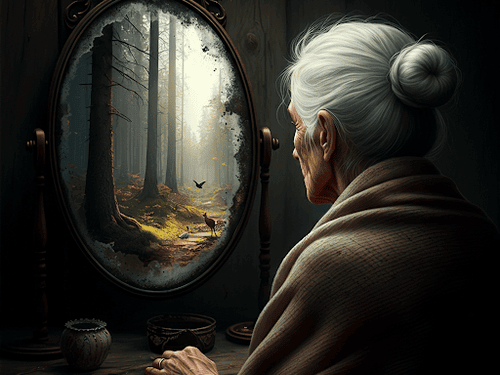
You find yourself to be an old woman
You’re sleeping late.
When you wake up you come upon an ancient mirror
And you see your own face clearly.
Try not to lose sight of it again and go chasing shadows.
—2nd of Dongshan’s Five Ranks
As I’ve spent time with Dongshan’s second perspective—on the relationship between form and emptiness—I continue to be interested in using Dogen’s writings to get a perspective on Dongshan’s perspective.
Possibly the most well known of Dogen’s statements appears in his writings on the Genjokoan, sometimes translated as “The Way of Everyday Life.”
This statement is a kind of verse, Dogen’s capping phrase on the relationship between form and emptiness. It goes something like this:
To study the Way is to study the self.
To study the self is to forget the self.
To forget the self is to be enlightened by the ten thousand things.
To be enlightened by the ten thousand things is to free one’s body and mind and those of others.
No trace of enlightenment remains.
And this traceless enlightenment continues forever.
Dogen’s “to forget the self” resonates with Dongshan’s, “you see a face from long ago that you do not recognize.” It makes sense that if I forget myself, I will not recognize myself. But more than that, it speaks to experiencing the un-recognizability of the self, the un-graspability of the self.
Dongshan’s second perspective feels connected to Dogen’s, “To forget the self is to be enlightened by the ten thousand things.” When we see ourselves clearly, as the old woman does when she looks in the mirror, everything we look at has our face. More than a mirror—it’s like a window looking out on the 10,000 things.
I’m still sitting with finding myself to be an old woman, what’s that about?
More on Tuesday, see you then.
—David Weinstein

COME JOIN US on Tuesdays for koan meditation, dharma talk and conversation.
Register to participate. All are welcome.
David Weinstein Roshi, Director of Rockridge Meditation Community