PZI Events Calendar
W E L C O M E to the PZI Events Calendar! Here you will find all upcoming events and registration links for PZI Zen Online retreats, sesshins, and weekly meditations & talks. Search by individual event, day, or month. Save to your Google Calendar or iCal Calendar. No experience required to participate. All event times are Pacific Time. Questions? Contact Lucas at PZI Support.

F E A T U R E D
April 26: What Is This Light That Everybody Has? – Deep Sit Sunday Zen with John Tarrant & Tess Beasley
May 7–10: Say A True Word & I Will Stay The Night – Open Mind Retreat with John Tarrant, Tess Beasley, & Allison Atwill
June 8–14: Dragons & Tigers, Oh My! – Our Great Summer Sesshin with John Tarrant & PZI Teachers

- This event has passed.
THURSDAY ZEN with David Parks: A Hidden Wholeness
REGISTER
Sabbath and Meditation — Opening to What is Here
Let’s call it a vacation, a break, or maybe even a Sabbath time. It’s a chance to escape the usual week-end and week-out routine I follow the rest of the year. You know, the one where I’m busy writing the newsletter, packing the truck with statues and cushions, my focus on our Thursday Bluegrass Zen meeting in Lexington. Now at the end of my time away, I’d like to call it Sabbath time.
Sabbath
In Abrahamic religions, Sabbath is a designated day of rest, marking the 7th day of creation when God took a rest from the other six days of creation. Before time, God was busy, you know, the spirit over the waters, the light, the dark, the separation of the land from the water, plants, animals, human beings. It had been a busy few days, so it was time for a rest. Likewise it was determined over years of tradition, that such a day of rest might be good for the community as well. And so, Shabbat. Sabbath. This day of rest became so important to the Hebrew people, that its observance became a cornerstone for Jewish law and practice.
Sabbath is a time when activity stops. As labor ceases, so do its fruits. I cannot point to anything and attach to it as mine. Labor stops and no attainment. From this place, the heart at rest, it is possible to notice the life all around and through, to notice the crow call, the wind in the pine branches, the yellows of the sunflowers as they track the sun making its course through the day. Too, it is a time to notice the interior textures of life as they open, flow and cascade, a rumble and thrum, thoughts and feelings, a sense of opening before and beyond time. Inside, outside, and in between fade and there is “just this.” Sabbath opens time within time, one taste, eternity (or as those mystics of the Abrahamic faiths might call it, God), the wholeness hidden in plain sight, moment by moment. Thomas Merton writes, in his poem, Hagia Sophia (wisdom of God), a later poem of his influenced by his encounter with DT Suzuki and Rinzai Zen:
There is in all visible things an invisible fecundity, a dimmed light, a meek namelessness, a hidden wholeness. This mysterious Unity and Integrity is Wisdom, the Mother of all, Natura naturans. There is in all things an inexhaustible sweetness and purity, a silence that is a fount of action and joy. It rises up in wordless gentleness and flows out to me from the unseen roots of all created being, welcoming me tenderly, saluting me with indescribable humility. This is at once my own being, my own nature, and the Gift of my Creator’s Thought and Art within me, speaking as Hagia Sophia, speaking as my sister, Wisdom.
In this I find the practice of Sabbath, a noticing and welcoming of the wordless gentle as it rises up in all things, pointing and participating in life, in the Dao or if you prefer, the wisdom of God. Also, at least for me, this is the practice of zazen, seated meditation, an alertness and a noticing of what is here—right down to the bones.
—David Parks
COME JOIN US on Thursdays for koan meditation, dharma talk and conversation. All are welcome. Register to participate.
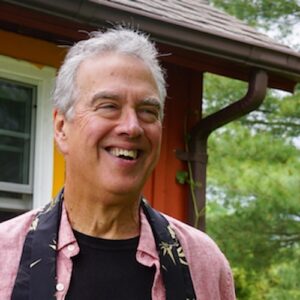
David Parks Roshi, Director of Bluegrass Zen